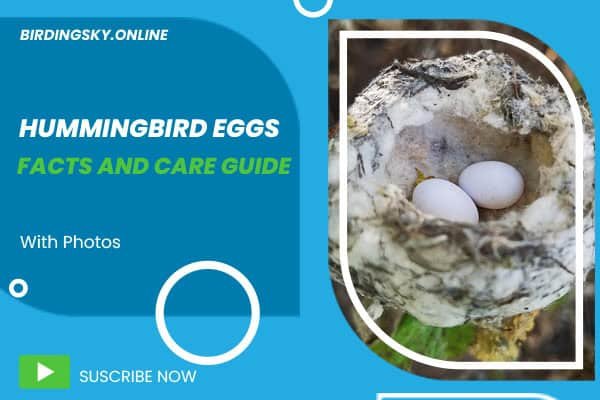
Welcome to our comprehensive guide on hummingbird eggs! Did you know that these tiny marvels of nature are even smaller than a penny? Yet, they hold the power to captivate us with their delicate beauty and miraculous journey from hatch to flight. In this article, we will embark on an exploratory adventure into the enchanting world of hummingbird nests, as we uncover fascinating facts and share essential care tips for these precious eggs. So, let’s dive in and discover the secrets behind these incredible creations of the avian world.
The Lifecycle of Hummingbird Eggs
Hummingbird eggs go through an incredible lifecycle, beginning with the moment the mother hummingbird lays two eggs. These tiny, delicate eggs are typically no larger than a small jelly bean. The mother carefully chooses a secure and well-hidden spot to build her nest, ensuring the eggs are protected from predators and the elements.
Once the eggs are laid, the mother hummingbird diligently takes on the responsibility of incubation. She spends the majority of her time keeping the eggs warm, using her body heat to maintain the optimal temperature needed for development. This process typically lasts for approximately 14 to 19 days, depending on the species of hummingbird.
During the incubation period, it’s fascinating to observe the dedication of the mother hummingbird. Despite the small size of the eggs, they hold the potential for new life. As the days pass, the miracle of nature unfolds within the fragile shells. It won’t be long before the eggs begin to hatch, revealing the arrival of adorable chicks.
When the time is right, the hatchlings start pecking their way out of the eggs, using a small egg tooth to break through the shell. It’s an exhausting process that requires strength and determination. Once the chicks have successfully hatched, they are tiny and helpless, with minimal feathers and closed eyes.
